Healthcare professionals understand that many illnesses present similar symptoms. For example, certain skin conditions, such as psoriasis and fungal skin infections, may appear very similar. They can present with scaly, itchy, and irritated patches of skin, which can be confusing to ascertain at first glance. Distinguishing between conditions with similar symptoms can be difficult, especially when nurses must assess many patients quickly with limited staff available.
However, learning to tell psoriasis from fungal skin infections can prevent misdiagnoses, enable patients to get appropriate and timely treatment, and reduce the risk of worsening conditions. For example, a ringworm infection being misdiagnosed as psoriasis can lead to the patient being given steroids to address symptoms. Unfortunately, steroids can cause ringworm infections to worsen.
Most fungal infections are also contagious. When these skin conditions are properly identified in patients, healthcare professionals are more likely to reinforce infection control procedures to prevent transmission through direct contact or contamination.
This guide explains how to tell psoriasis from fungal infection nursing and highlights the key signs nurses should recognize when assessing patients with similar symptoms, including scaly or irritated skin.
Psoriasis vs. Fungal Infection: The Core Clinical Differences
To differentiate psoriasis from fungal infections, nurses should understand how each condition develops, how they differ, and which symptoms may overlap.
Psoriasis vs. Fungal Infections: Clinical Differences
Psoriasis
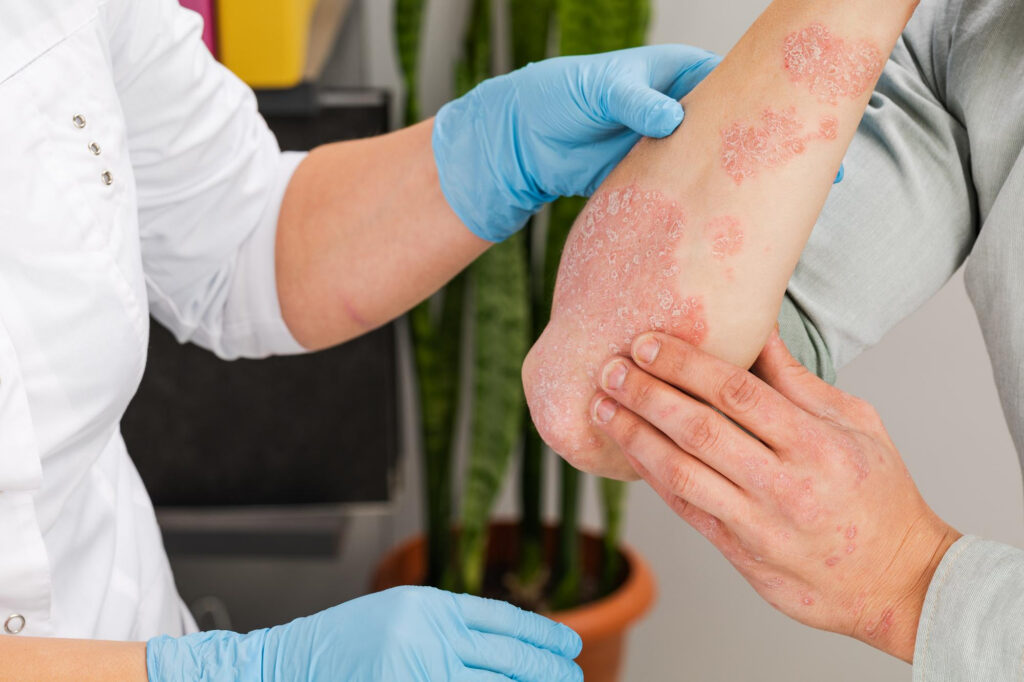
Psoriasis is a chronic skin condition that presents with an itchy rash and scaly patches that are frequently found on the knees, elbows, stomach, and scalp. This inflammatory condition causes discomfort that heavily impacts a person’s quality of life, affecting the quality of their sleep, level of productivity, and physical and psychological health. Around the world, over 125 million people are living with psoriasis. In the US alone, more than 8 million have this skin condition.
There is no known cure for psoriasis currently; however, there are ways to manage its symptoms via treatments, therapy, and lifestyle habits.
According to the Cleveland Clinic, typical psoriasis symptoms include:
- Rashes
- Skin plaques
- Itchy skin
- Cracked and dry skin
- Pitted, cracked, or crumbly nails
- Joint pain
There are different types of psoriasis, which are typically differentiated by how they present on a person’s skin:
| Type | Appearance/Symptoms |
| Plaque psoriasis (psoriasis vulgaris) | Appears as raised, red patches of skin covered by silvery-white scales. Plaque psoriasis usually appears on the scalp, trunk, limbs, elbows, and knees. |
| Guttate psoriasis | Appears as small, red dots on a person’s torso or limbs. This type of psoriasis is usually found in children and young adults, and is typically triggered by an upper respiratory tract infection. |
| Pustular psoriasis | Typically triggered by stress, infections, medications, or certain chemicals, pustular psoriasis presents as pus-filled bumps surrounded by red, inflamed skin. This usually presents on the hands and feet, but can also cover a large part of the body. |
| Inverse psoriasis | Inverse psoriasis appears as smooth, shiny, red patches. This type of psoriasis are usually found in the folds of skin, such as underneath the breasts, groin area, or the armpits. |
| Erythrodermic psoriasis | A severe form of psoriasis that appears as red, scaly skin that covers most of the body. Erythrodermic psoriasis can be triggered by a severe sunburn, certain medications (corticosteroids), or a different type of psoriasis that is not managed properly. This form of psoriasis can lead to infections, heart failure, dehydration, and other life-threatening conditions. |
Fungal Skin Infections
Fungal skin infections, also referred to as cutaneous mycoses, are skin conditions caused by fungi (yeast or mold) that infect or overgrow on the skin, hair, or nails. Fungal infections found on the skin and nails are typically easy to treat with antifungal medications; however, when fungal infections affect the throat, lungs, urinary tract, and other parts of the body, they may be more challenging to address.
Typically, fungal infections on the skin present with the following symptoms, according to the Cleveland Clinic:
- Itching, soreness, redness
- Rash
- Painless lump under the skin
More specific symptoms for fungal skin infections depend on the type of infection. These are the most common types of superficial fungal skin infections:
| Type | Appearance/Symptoms |
| Ringworm | Also known as tinea corporis, ringworm is named for its signature ring-shaped rash. It usually appears as a circular red sore, with its outer part raised, accompanied by a scaly skin. |
| Athlete’s foot | Appears as itchy, scaly, rash that typically starts between the toes and spreads to the bottom and sides of the feet. It can also cause skin to look swollen and discolored (red, purple, or gray), cause blisters, and cause a stinging or burning sensation on the skin. The fungi that causes athlete’s foot thrives in warm and damp places, including shoes, socks, gym showers, and public pools. |
| Jock itch | Appears as a red, circular or ring-shaped rash with raised edges in the genitals, inner thighs, and buttocks. It can also cause the skin to flake, peel, or crack. |
| Candidiasis | A kind of fungal infection that arises from an overgrowth of a type of yeast called candida albicans. Candidiasis can occur due to stress, certain medical conditions, compromised immune systems, and unhealthy eating patterns. On the skin, it can present as red and raised patches usually in the folds of the skin. |